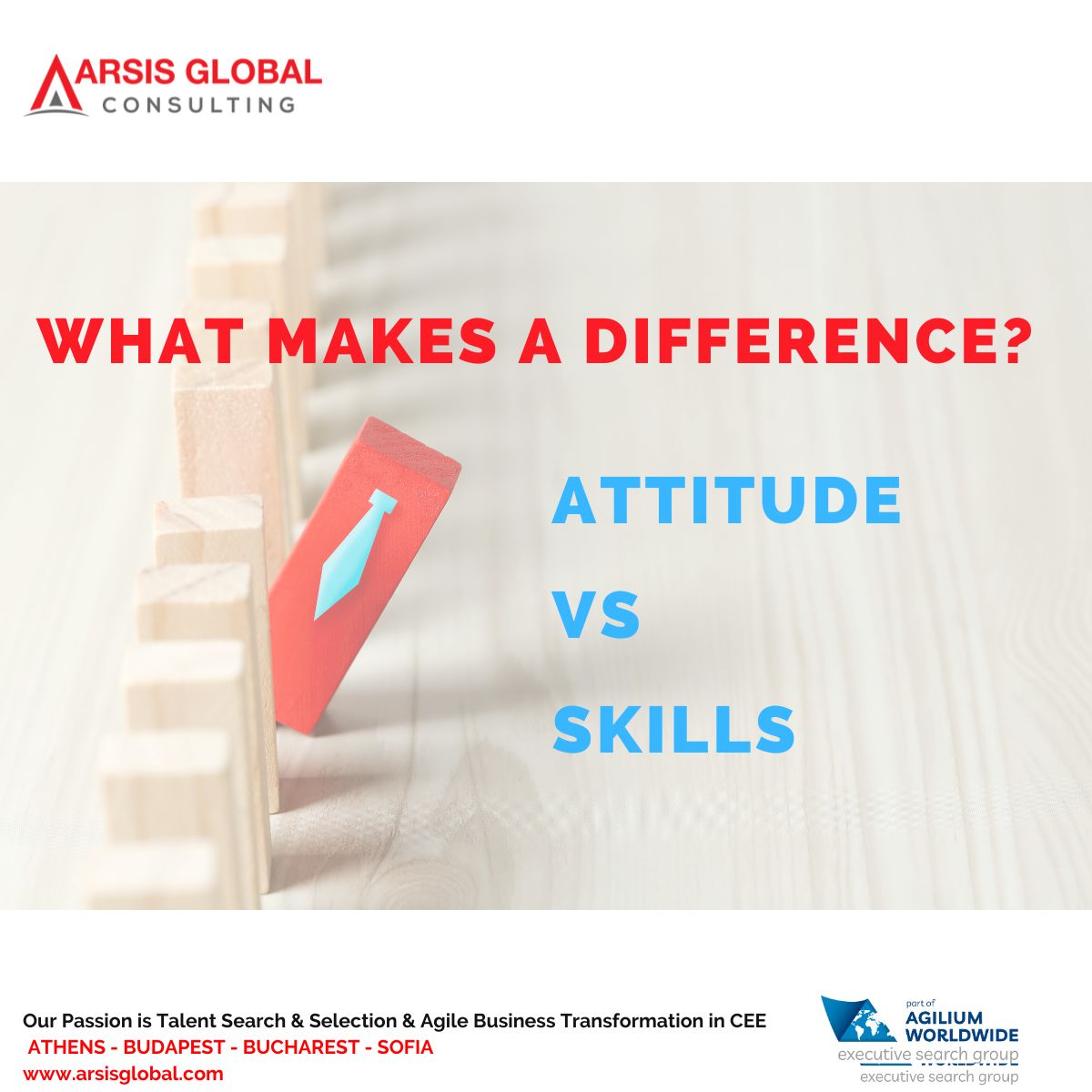
Skills, Attitude, or Talent? Hire for Both — But Know Who You Are First

In executive search, one of the most common debates I hear is whether to hire for skills, attitude, or raw talent. It’s an important question — and one that separates good hires from transformative ones.

Skills tell you whether someone can do the work today. They are measurable, testable, and easy to benchmark. Attitude, on the other hand, reveals how far that person might go tomorrow. It determines whether they grow with your business, collaborate effectively, and contribute to something larger than their own output.

The truth is, skills and attitude are not rivals — they answer different questions. Hiring only for skill gives you competence; hiring only for attitude gives you potential. The best hires offer both. But here’s the catch: you can only recognize that combination if you deeply understand your own organization.

Before assessing candidates, every client must be able to answer:

  • What kind of environment do we really provide — structured, entrepreneurial, fast-paced, or stable?
  • What kind of personalities thrive here — those who challenge the status quo, or those who build steady improvement over time?
  • Which values are truly practiced daily — not the ones written in the brochure, but the ones rewarded through promotions and recognition?

Only when you have that clarity can you decide which skills are essential and which attitudes fit your leadership culture. A technically brilliant CFO with a conservative mindset may shine in a traditional enterprise but struggle in a scaling tech firm. Similarly, an optimistic, visionary marketing director may fit beautifully into a growth-driven brand but feel adrift in a risk-averse organization.

As recruiters, our job is to see both sides — the professional capability and the cultural chemistry. But it becomes a true partnership when our clients also know their own story, their rhythm, and the kind of energy that makes them thrive.Hire for both skills and attitude — in that order — and be honest about what your organization can actually develop. That honesty will help you not just fill a role but build a lasting team.

Manufacturing Slowdown in Romania: A Warning Signal for Central and Eastern Europe

Recent data from the Romania Manufacturing PMI (BCR / Erste Group) sends a clear signal for industrial companies across Central and Eastern Europe.

In February 2026, Romania’s Manufacturing PMI fell to 45.3, down from 48.1 in January — the lowest level on record and a clear indicator of contraction in the manufacturing sector.

The report highlights several structural pressures affecting Romanian industry:

  • Weak demand and declining new orders
  • Heightened global economic uncertainty
  • Tightening customer budgets
  • Rising input costs across energy, transport, and raw materials

Industrial production trends confirm the pressure. Romania’s industrial output declined 0.9% in 2025, following a 1.5% decline in 2024, signaling a persistent slowdown.

At the same time, Romania’s manufacturing sector remains highly dependent on external demand. Germany accounts for approximately 20% of exports, exposing Romanian industry to fluctuations in European industrial cycles.

Another structural challenge is that much of the region’s manufacturing still operates relatively low in the global value chain, with limited high-value-added production.

But this is not only a Romanian story.

Across Central and Eastern Europe, industrial companies are navigating an increasingly complex environment shaped by:

  • geopolitical uncertainty
  • supply chain disruptions
  • trade pressures
  • rising operational costs

A recent Boston Consulting Group analysis on global trade dynamics highlights that companies can no longer rely on traditional cost-cutting approaches. Instead, they must buildenterprise-wide cost resilience, redesign supply chains, and increasingly adopt AI-enabled operating models.

However, strategy alone is not enough.

Execution is the decisive factor.

From our experience supporting companies across the region, successful transformation requires a structured approach that connects strategy with operational implementation.

This often begins with strengthening the foundations of the organization:

  • Clarifying Vision, Mission, Values, and Purpose
  • Translating strategy into Balanced Scorecards and measurable KPIs
  • Implementing AI-driven cross-functional process management
  • Introducing Agile ways of working to accelerate execution
  • Strengthening HR frameworks and leadership capabilities
  • Enhancing the commercial model through servitization and value-based offerings
  • Ensuring strong corporate governance structures

In today’s volatile environment, transformation is no longer optional for industrial companies in Central and Eastern Europe.

It is essential for maintaining competitiveness and moving up the value chain.

At Arsis Global Consulting, we support organizations across the region in designing and implementing these transformations — combining strategic insight with hands-on operational experience in business leadership, restructuring, and digital transformation.

Because today the difference between companies that succeed and those that struggle is not the quality of their strategy.

It is the discipline of execution.

Your CV Has 8 Seconds. Make Them Count.

Eight seconds.

That’s how long your CV has to answer the questions every recruiter is asking—often subconsciously:

  • Who are you?
  • What are you known for?
  • What impact have you delivered?
  • Why should I keep reading?

After reviewing thousands of CVs across Central and Eastern Europe at Arsis Global Consulting, a clear and costly pattern emerges. Most CVs don’t fail because candidates lack experience. They fail because they read like job descriptions.

Responsibilities.

Duties.

Tasks.

They tell us what you did — but not why it mattered or what changed because you were there.


Your CV Is Not a Timeline. It’s a Story.

A strong CV is not a chronological list of roles.

It’s a personal value proposition.

Yet, these are the most common pitfalls we see:

  • A writing style that sounds like a compliance document, not a human being
  • No clear professional identity — the essence of who you are and what you stand for
  • Inability to articulate the problem you solve for your next employer
  • Passive language and weak verbs (“responsible for”, “involved in”)
  • No measurable outcomes, no quantified impact
  • Missing industry and role-specific keywords required by both ATS systems and recruiters
  • Zero differentiation from dozens of candidates with similar titles

The result? Strong professionals being overlooked.


Impact Beats Activity. Every Time.

“Managed a team of 15” tells us very little.

“Grew the team from 8 to 15 while reducing turnover by 40% and improving delivery timelines” tells us you deliver results.

Recruiters don’t hire activities.

They hire outcomes, decisions, and leadership impact.


In a Competitive Market, Differentiation Is Non-Negotiable

In today’s candidate-driven yet highly competitive CEE market, employers have options. Your CV is often your first — and only — chance to stand out.

Ask yourself honestly:

When was the last time you reviewed your CV through a recruiter’s eyes, not your own?

If your CV doesn’t clearly communicate your value within seconds, it’s not working hard enough for you.


Your experience deserves better storytelling. We support Talent to tell their story. Contact us. 

#PersonalBranding #CVAdvice #CareerStrategy #ExecutiveSearch #TalentAcquisition #ArsisGlobal

The next professional chapter: Career transition services & workforce outplacement

Change is the only constant in today’s fast-paced professional landscape and navigating career transitions can feel overwhelming. Whether you’re seeking to pivot into a new industry, return to the workforce after a break, the right support can make all the difference. 

Career transition also involves outplacement services: when employees face job loss, companies can provide meaningful support beyond a severance package. This is a professional guidance for departing staff — whether through one-on-one coaching, career counseling, or structured job-search assistance. By offering these services, employers ensure that individuals don’t navigate unemployment alone; instead, they receive expert coaching to help them re-enter the workforce faster.

In this article, we’ll explore how leveraging career transition- & employee outplacement services can propel professional journey, turning uncertainty into opportunity. 

Understanding Career Transition Services

For employees, career transition services provide structured support — from skills and personality assessments to one-on-one coaching — helping them regain confidence, explore new opportunities, and move forward after job loss. 

For employers’ employee outplacement sponsoring demonstrates responsibility and care, ensuring departing staff are treated with dignity. This also increases the company’s reputation and morale among remaining teams.

The Importance of Career Transition Services in Today’s Job Market

In today’s dynamic job market, the ability to adapt to change is more important than ever. Economic shifts, technological advancements, and evolving industry trends can all impact job stability and career prospects. Career transition services can provide the guidance and resources needed to navigate these changes effectively.

One of the primary benefits of career transition services is the access to expert advice and insights. Career coaches and counselorsare well-versed in the latest job market trends and industry demands, allowing them to offer valuable guidance on how to position yourself for success. This can include identifying emerging job opportunities, understanding the skills and qualifications that are in demand, and developing strategies to stand out in a crowded job market.

Additionally, career transition services can help you build a strong professional network. Networking is a crucial component of career advancement, and having the support of a career coach can open doors to new connections and opportunities. 

Key Components of Effective Career Transition Services

Effective career transition services are characterized by several key components that work together to provide comprehensive support. One of these components is career coaching, which involves one-on-one sessions with a trained professional who can offer personalized guidance and advice. Career coaches can help you set realistic career goals, develop new work related soft-skills, and stay motivated throughout the transition process.

In many cases, specialized tools — such as Hogan Assessments or other personality and strengths assessments — are used to provide deeper insight into leadership style, motivators, and potential areas for growth. These assessments help individuals understand not only what they can do, but also where they are most likely to thrive. With this clarity, a career coach or counselor can guide the person through building a tailored strategy: from identifying suitable opportunities to positioning themselves effectively in the job market.

Another essential component of career transition services is resumè writing assistance. A well-crafted resume is crucial for making a positive impression on potential employers.

Interview preparation is also a vital aspect of career transition services. Successful interviews require thorough preparation and practice, and career transition services can provide the tools and resources needed to excel in this area. This can include mock interviews, feedback on your responses, and tips for building confidence and reducing anxiety. 

Choosing the Right Career Transition Service or Employee Outplacement Provider

Choosing the right career transition service is a crucial step in ensuring a successful career transition. 

Reviews & demonstrated expertise 

Researching different career transition services can help people on the job market identify the ones that offer the support they need. Look for services that have a strong track record of success and positive reviews from clients. Additionally, consider the qualifications and experience of the career coaches and counselors. It’s important to work with professionals who have the expertise and knowledge to provide effective guidance and support.

For employers, selecting a high-quality outplacement partner reflects care and responsibility toward departing staff. It ensures people leave with positive attitude, practical tools, and confidence in their future — reducing stress, maintaining morale among remaining employees, and protecting the company’s reputation.

Digital readiness

Today’s job market is digital. Outplacement services can help you optimize your online presence (LinkedIn, job boards, personal branding), use advanced search techniques, and tap into digital networking opportunities. Many providers also offer online consultations, which make it easier to access expert coaching from anywhere — often at a lower cost and with more flexible scheduling. This ensures you’re not just sending applications but actively shaping your professional visibility.

For employers: Choosing providers that integrate technology and offer virtual consultations gives staff faster, more practical access to support. It’s also cost-effective, ensuring comprehensive services without unnecessary overhead, while positioning the company as modern, flexible, and employee-centric.

Cost, accessibility (in-person vs. virtual), and the coach’s expertise all matter. 

Moving Forward With Confidence: The Value Of Career Transition & Employee Outplacement Support

For employees: Career transition services help turn uncertainty into opportunity — providing expert coaching, skills assessments, online consultations, and practical job-search strategies. Change can feel overwhelming, but it also opens doors. Change can feel overwhelming, but it also opens doors. With the right guidance and tools finding a new job is almost guaranteed. 

For companies: Offering employee outplacement and transition support shows responsibility and care, thus increasing the employers’ reputation among key stakeholders, investors, government bodies and future job applicants. 

At Arsis Global, we help job searchers and companies alike — supporting individuals with tailored coaching, assessments, and career strategies, while guiding organizations in providing outplacement solutions that fits in their HR strategy. 

7 Proven Steps to Stand Out in a Crowded Market

In today’s competitive world, talent and experience alone are no longer enough. Employers, clients, and partners are drawn to people who present themselves with clarity, authenticity, and confidence. That’s where personal branding comes in. Building a strong personal brand isn’t about self-promotion — it’s about communicating your unique value so others immediately understand why they should work with you. Here are 10 proven strategies to help you stand out.

Understanding the Importance of Personal Branding

Personal branding shapes the way potential employers/ partners perceive you. It influences hiring decisions, client trust, and professional opportunities. A consistent personal brand:

  • Builds credibility
  • Creates visibility
  • Attracts the right opportunities

Think of it as your professional reputation and achivements are made visible. 

1. Identifying Your Unique Selling Proposition (USP)

Your USP is the foundation of your personal brand — it’s the clear statement of what sets you apart. Start by reflecting on three questions:

  • What do you do best?
  • How do you add value to others?
  • Why should someone choose you over someone else?

Write down your strengths, achievements (make achivements quantitative), and passions, then refine them into a concise statement. For example: “I help growing companies turn complex B2B sales into simple, automated systems. This is proven to increase conversion rate from cold leads to opportunity by 40%” A strong USP makes you memorable.

2. Leveraging Social Media to Increase Your Visibility

Social media is one of the most powerful tools to amplify your brand. Choose platforms where your audience is most active (LinkedIn for professionals, Instagram for creatives). Share valuable insights, comment on industry trends, and highlight your successes.
Consistency is key: post regularly, use professional visuals, and ensure your bio clearly communicates your achivements, experience and USP. 

The more visible and consistent you are, the easier it becomes for recruiters, hiring managers, and potential clients to find you online.

3. Writing a Compelling CV

Your CV is often the first touchpoint of your brand. Beyond listing skills and experience, it should tell a story:

  • Begin with a strong personal statement that reflects your USP
  • Highlight achievements with measurable results
  • Keep the design clean, modern, and easy to read & really related to the position you are applying for. 

4. Networking with Purpose

Your network is part of your brand. Attend industry events, join online communities, and engage with thought leaders in your field. Networking is not just about collecting contacts; it’s about building relationships that add value on both sides.

5. Continuous Learning and Skill Development

A strong brand evolves. Stay relevant by investing in ongoing education — certifications, workshops, or even self-directed learning. Share your learning journey publicly; it positions you as proactive and forward-thinking.

And don’t forget to post o your social media platforms all these new skills and learning achivements. 

6. Storytelling as a Branding Tool

Facts tell, but stories sell. Share personal stories that connect with your audience — how you overcame a challenge, learned from failure, or achieved growth. Storytelling humanizes your brand and creates emotional connection.

Keep these stories short and clear. They will be a great asset on interviews when you have to andser to the “Who are You” question.

7. Seeking Mentors and Giving Back

Seek mentors who can guide your growth, and offer mentorship or support to others in return. Generosity builds a positive reputation & also connects you with more people. You never know who opens the door to your next big opportunity.. 

Final Thoughts & How To Start Your Personal Branding Journey

Personal branding is no longer optional — it’s essential. By clarifying your USP, building visibility, and consistently showcasing your strengths, you create a powerful presence in any market. 

At Arsis Global, we offer coaching and personal branding sessions starting from €150/hour. Reach out today to start building a brand that opens doors, attracts opportunities, and positions you for lasting success.

What is Personal Branding?

A Short Guide to Crafting Your Personal Brand

“A clear personal brand communicates what you have to offer and attracts desirable opportunities.”

DON MARUSKA

A – Authenticity – The real You

B – BE yourself – Dare to Be

C – Content – create trust

D – Digital Presence –

E – Experience – to express

F- Followers – build it

G – Google Me – Online reputation

H- Helping – Volunteer, reach out

I – Interviewing skills – how to present

J- Join – groups, social network

K- Keywords – use your own

L- Linkedln – learn, use & be present

M – Motivation – understand

N- Networking – locally, globally

M – Motivation – understand

N – Networking – locally, globally

0 – Online – the right channel

P- Photo – be professional

Q – Questions – be active

S- Skills, Social Media – how to

T- Targets – the target market

U – Unique – UVP= unique value proposition

V- Value – be clear & precise

W- Writing – CV, LI, Twitter..

X – Be extreme, to stand out

Y – Do You!

7- Zen – be in focus & reality

YOUR PERSONAL BRAND IS, WHAT DIFFERENTIATE YOU FROM OTHERS.


What is the purpose of a curriculum vitae?

How to reduce uncertainty in the  recruitment process?

Introduction:

A CV for a job displays your entire work history and details job- and industry-relevant professional accomplishments, such as publications, research, academic scholarships and grants, professional memberships, speaking engagements, and lectures or presentations you’ve given throughout your career.

  1. Gather Information for your CV

First, you have to prepare. Preparation is a critical part of writing a CV that stands out. Having your essential information ready will ensure you customize your CV to your desired job.

Here’s how to prepare to write a curriculum vitae effectively.

First, review the job description closely. Make a note of all the requirements and “nice-to-haves.”

Then make a list of your:

  • Professional experience, including employers’ names, dates of hire, locations, job titles, and responsibilities.
  • Significant accomplishments from your current and previous jobs.
  • Education credentials. List all schools, their locations, years attended, and the degrees, certifications, licenses, and notable grades you received from each.
  • Publications, including their titles and dates published.
  • Speaking or teaching engagements, dates, topics, and locations.
  • Professional affiliations and memberships, your role, and dates affiliated.
  • Soft and hard skills. It’s OK if it’s a long list; you can edit it later.
  • Volunteer work, including notable achievements, names of organizations, and dates you volunteered for each.
  • Other unique experiences or attributes that set you apart.
  1. Choose a  CV template to format your curriculum vitae

There is no set CV format for a job application, so you’re free to organize your professional qualifications based on your industry, job title, and the requirements for the position. 

  1. Add your contact information at the top of your CV
    • No matter how you format your CV for a job, it’s wise to place your contact information at the very top of your resume so recruiters and hiring managers know how to find you.
  1. Write a professional CV summary or objective statement

We recommend adding a professional summary or objective statement, often called a personal statement, on every job application CV you write because they give you the chance to show potential employers what you offer in a bite-sized summary that they can digest immediately. A professional statement on your CV can give you a competitive advantage when written well.

  1. Show off your relevant skills on your CV

Although placing your CV skills section directly under your summary is optional, we recommend placing it at the top of your CV template. Doing so helps potential employers find your core qualifications quickly when they scan your CV for relevance, and it is often the section that recruiters and hiring managers value most.

You can stand out by displaying five to 10 of your most job-relevant hard and soft skills on your curriculum vitae. Most potential employers value soft skills for all job titles, with 61% reporting loving them as much as hard skills. Since only 62% of CVs emphasize relevant soft skills, matching your soft skills to the job description will get you noticed.

  1. Add Work Experience to your CV

Work history is an essential part of any job application CV. Whether you put yours before or after your skills section is up to you, but it’s best to place it in the first quarter of your CV so potential employers can find it easily.

Recruiters and hiring managers want to know what you contributed to your current and previous employers, so they look for statements on your curriculum vitae that describe your accomplishments. Showcase yours in a bulleted list of three to five job-specific achievements for every job you list in your CV employment history section. 

Studies show that 34% of hiring managers ignore CVs that do not show measurable results, so quantify your professional achievements on your curriculum vitae to make the best impression.

When you make a CV work history section, list current and past jobs in reverse-chronological order, starting with the most recent position.

In addition to accomplishments, a CV work history section must include:

  • Company names
  • Dates of employment
  • Job title
  1. Make a CV education section

Like the skills and work history sections, you can present the education section of your CV in any order on your resume, depending on your experience level and field of study.

Display the name of the school or institution, the degree you earned, and the date you graduated. If you have multiple degrees or studied at more than one institution, list them in reverse chronological order, with the most recent school first. Provide your GPA if you got a 4.0 or higher, and note academic honors, awards, grants, scholarships, or fellowships.

  1. Create optional CV sections

Typical optional sections on a curriculum vitae include:

  • Certifications

Not all professions require certificates or licenses, but if you have them, create a section on your CV and list them in reverse chronological order from the date you received them.

  • Awards and Honors CV section

When writing a CV, you may add a section to emphasize the awards you have received throughout your education and career. This section should include dean’s list recognitions, academic or professional distinctions, leadership, and volunteer or community awards.

  • Publications

If you have published articles, book chapters, research papers, essays, stories, or books, showcase them in a separate section of your CV — they can help you stand out!

  • Awards

George Polk Award for National Reporting (2020)

Conscience-in-Media Award (2018)

Clio Awards (2016)

  • Volunteer experience on a CV

Hiring managers like to see volunteer experience on a curriculum vitae because it shows you are well-rounded, community-minded, and willing to go the extra mile.

When writing a CV volunteer experience section, format it exactly like your work experience section, with the most recent experience first, your volunteer title, the name and location of the organization, and the date you volunteered.

  1. Proofread and revise your curriculum vitae

Whatever you do, don’t ignore this step! Studies show that approximately 77% of hiring managers reject CVs with typos or grammatical mistakes, and it would be a shame to miss out on a job if you have all the desired qualifications but misspell a word.

Proofread your CV for a job application more than once, and have a trusted friend or family member review it and make necessary revisions before sending it to a potential employer.

Bulletproof your curriculum vitae by ensuring it is formatted correctly and includes the correct information.

  1. Save your CV

Making a CV is about more than how you write your CV and organize its sections. A polished job application CV means you must also name your document professionally and save it in an appropriate file format.

We recommend the following formula to save your CV:

Your Name-Job title-CV-Company Name-Date

Read the job description for the best file type for your job application CV. If a file type is not requested, then doc or .docx are safe bets for your CV file type because most ATS can read Microsoft Word files, and most companies prefer them.

*PRO TIP

Put your name at the front of your CV file name because it makes it easy for hiring managers to remember you when sorting through hundreds of CVs for a job application.

To sum up

In conclusion, a CV is important because it tells employers about your skills and work experience. A CV summarises your work history, education, and qualifications, and if you write it well, a CV will help you get interviews and jobs. You’ll need to create an effective CV. Writing a CV doesn’t have to be difficult.


10 Steps of Building Your Professional Personal Brand

Achieving Distinction and Success

1. Establish your professional purpose/ vision

2. Explore your skills & strengths

3. Analyze your competition, how you can stand out

4. Review & update you online presence

5. Update your professional headshot

6. Let recruiters find you online – Linkedln, Twitter

7. Be ready to answer the “Who are You” question

8. A clear message in your CV & Linkedln profile

9. Your communication, body language & appearance.

10. Your Experience & stories.

YOUR PERSONAL BRAND IS, WHAT DIFFERENTIATE YOU FROM OTHERS.


How to answer ‘what is your weakness?’ in a job interview?

Let’s be honest–everybody hates this question. but you can still answer it right.

Introduction:

If you survey a group of job seekers about their least favorite interview question, and the consensus typically is: “What is your biggest weakness?”

It’s seemingly impossible to provide an adequate response to a question like this. You don’t want to twist it around into a positive because then you’re not answering the question, but you also don’t want to confess a flaw that may sabotage your chances of getting hired. There are better ways for an interviewer to get you to think critically about your skills than asking this question. Karen Southall Watts, a trainer, coach, author and professional encourager for entrepreneurs and managers says that “What are your weaknesses?” is one of her least favorite questions. “It’s been encouraging over the years to see managers move to more situation-based and results-focused questions that serve both [the] candidate and employer better. Yet, it is always wise to prepare for traditional interview questions like this one.”

So, how do you successfully answer the dreaded question?

Avoid the strength disguised as a weakness.

Let’s start with how not to answer this question. While some people may tell you this is an opportunity to share a strength masked as a flaw, that’s not the answer most interviewers are looking for these days.

Over time, the strategy for answering ‘What is your greatest weakness?’ has changed. The old school method was ‘to turn a weakness into a strength,’ such as ‘I am a perfectionist, so you know my work will always be top quality.’ The modern interviewer wants to hear a real weakness and then dive into how you deal with it.

If you Google how to answer this question, this is what you will see. People recommend saying, ‘I work too hard’ or ‘I’m a perfectionist’. If you say something like this, you aren’t being genuine. You’re just giving me a rehearsed answer that you read online.

Be honest, with a twist.

Don’t lie! Interviewers are surprisingly adept at seeing through scripted and false answers. Interviewers can also easily spot a dishonest response. Be honest – with yourself and your interviewer. But … we all have multiple weaknesses. Choose one that is not going to torpedo your chances of landing the role.
Make it clear that your weakness is something you’ve worked to overcome and won’t hinder your job performance. Show that you care about personal development. If you’ve struggled in a specific area of expertise but you’re taking a class in it to bolster your skillset, great! Talk about that. If you’ve always turned to jelly at the thought of public speaking but have joined your local Toastmasters chapter or you’re taking an improv class to get more comfortable with speaking in front of a large group, you’ll want to talk about that. Whatever it is, your interviewer should be able to envision the ‘happy ending’ to the story.

Just don’t self-sabotage.

Don’t name a weakness that is going to get in the way of [you being able to do] your job successfully, working well with others, or otherwise succeeding in the position for which you’re applying. Be honest, but very selective about which example to use.

To sum up

In conclusion, avoid choosing a “fatal flaw” – something that would knock you out of the running. “For example, saying that you lack attention to detail when you are interviewing for an accounting position would immediately disqualify you, no matter how good your strategies for dealing with it are.”


9 Challenging Interview Questions & Possible Answers

How to Ace Your Interview

Always answer questions with clear evidence to back up what you say about yourself.

1. Who are You? Tell me about yourself! It’s an open-ended question. Be specific, short memorable in 2-3′.

2. Why you should be the one to be selected? Be specific & personal with clear example

3. What are your career desires? Use achievable objectives & present actions what you do to reach them.

4. How your education can support you in this position? Be prepared about the required competencies and match them with your education.

5. Are you a team player? Use more than the “yes” reply, provide proof/examples.

6. Give me an example for a conflict in your studies and how it was resolved? Present the problem, & present how you worked in collaboration to resolve it.

7. What is your weakness? Everybody has a weakness and you present it how you work on it to overcome.

8. If we would ask your professors & team members how they would describe You? Be prepared & collect some references before.

9. What do you think which of your skills/abilities can support you in this job to be successful?

YOUR PERSONAL BRAND IS, WHAT DIFFERENTIATE YOU FROM OTHERS.